2026-10-28 ·
Water Heater Maintenance Schedule For Older Sacramento Neighborhoods
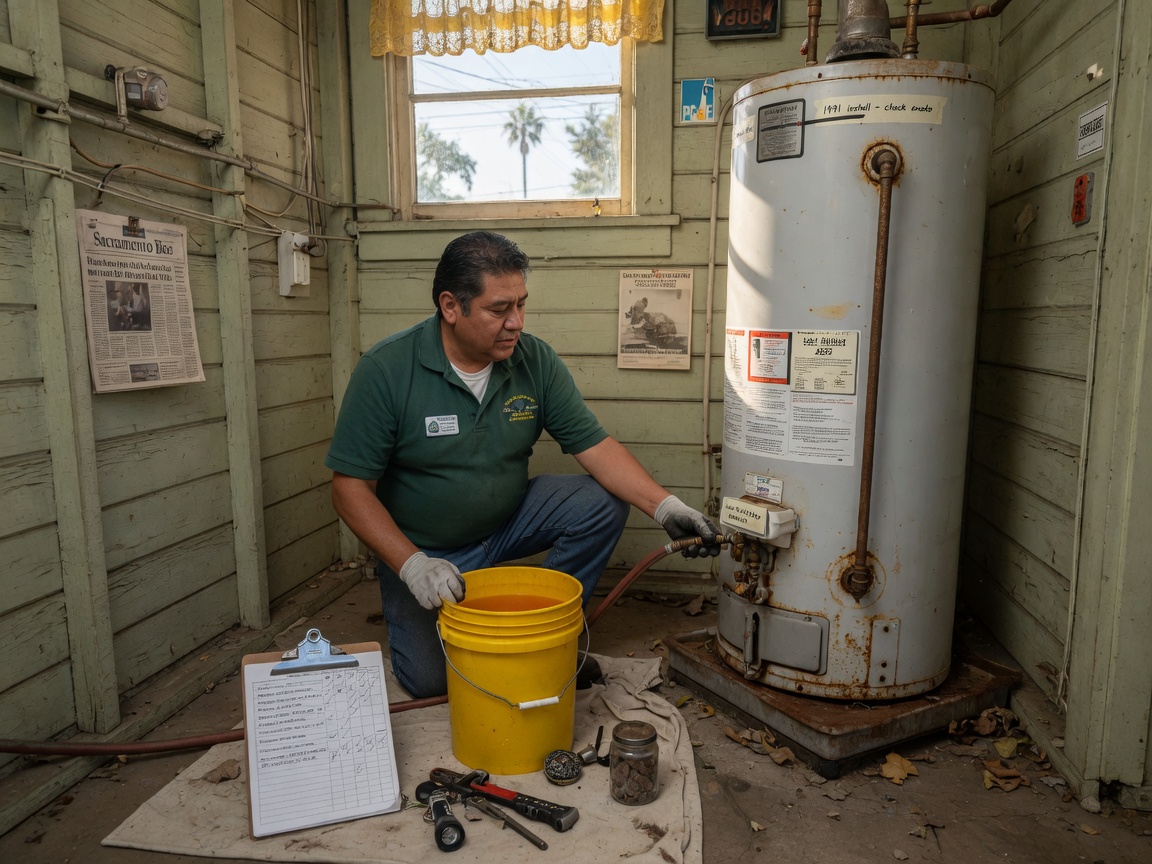
Homeowners in older Sacramento neighborhoods should flush and inspect their water heater twice a year, once in late fall before cool wet winters begin and again in early spring after the rainy season ends.
Older Housing Stock in Sacramento Neighborhoods
Homes built before 1970 in Land Park, East Sacramento, Midtown and Oak Park often contain galvanized steel pipes and original 40- or 50-gallon tanks that collect sediment faster than newer units. Cool wet winters increase corrosion risk while hot dry summers raise sediment hardening inside the tank. Technicians routinely find 15- to 25-year-old units still in service in Downtown Sacramento and North Sacramento because owners perform regular flushing. These conditions shorten anode rod life to roughly 4–6 years instead of the 8–12 years seen in newer Rancho Cordova subdivisions. Checking the rod during each service prevents tank perforation that leads to leaks onto hardwood floors common in these neighborhoods.
Recommended Maintenance Schedule
Follow this sequence for homes in South Sacramento and surrounding older blocks. In October, shut off power or gas, attach a hose to the drain valve and flush until water runs clear, usually 10–15 minutes. Remove and inspect the anode rod; replace if less than ½ inch of core remains. In March, repeat the flush and test the temperature-pressure relief valve by lifting the lever until water flows freely. Every 12 months, check the expansion tank pressure with a tire gauge and adjust to 50–60 psi to match typical city supply. These steps take 45–60 minutes when performed by an owner-operator familiar with Sacramento’s water chemistry.
How Weather Patterns Change the Job
Hot dry summers in Sacramento County push water heaters to work harder as inlet temperatures climb above 70°F, increasing scale buildup on heating elements. Cool wet winters bring cooler inlet water around 50°F and higher humidity that accelerates external rust on older tanks located in crawl spaces under Midtown bungalows. During the transition months, sediment can harden into concrete-like deposits that require a wet-vac during flushing. Technicians serving West Sacramento and Citrus Heights note that units near the American River Parkway experience slightly higher mineral content from local wells, requiring an extra flush cycle compared with homes farther east in Rancho Cordova.
When to Call for Professional Service
If flushing reveals discolored water after the third bucket or the anode rod shows heavy pitting, schedule professional water heater maintenance before the next seasonal change. Persistent lukewarm water after flushing often signals a failing dip tube or sediment-choked burner, common in 30-year-old units still operating in Oak Park. For leaks or no hot water after a heat wave, see the guide on troubleshooting no hot water after a Sacramento heat wave. California Tankless Pros maintains weekday hours of 8am–6pm and Saturday 9am–2pm for these inspections across Sacramento County.
Planning Ahead for Replacement
When an older tank reaches 12–15 years in East Sacramento or Land Park, factor in the cost of converting to a tankless unit if the home already has adequate gas line sizing. Review the article on what water heater replacement typically costs in Sacramento to compare timelines. Keep records of each flush date and rod condition so future service visits start with accurate history rather than guesswork.